Our Technology Platform
A detailed look at the science driving Follicea Technologies — from in silico virtual screening to automated synthesis, robotic high-throughput assays, and organoid validation.
A detailed look at the science driving Follicea Technologies — from in silico virtual screening to automated synthesis, robotic high-throughput assays, and organoid validation.
The Problem
Infertility affects a significant portion of the reproductive-age population, yet pharmacological innovation in this field has been limited for decades. Most current treatments focus on symptomatic management through hormonal stimulation, leaving the underlying molecular mechanisms largely unaddressed. Follicea Technologies was founded to change this through precision, mechanism-targeted drug discovery.
Our Approach
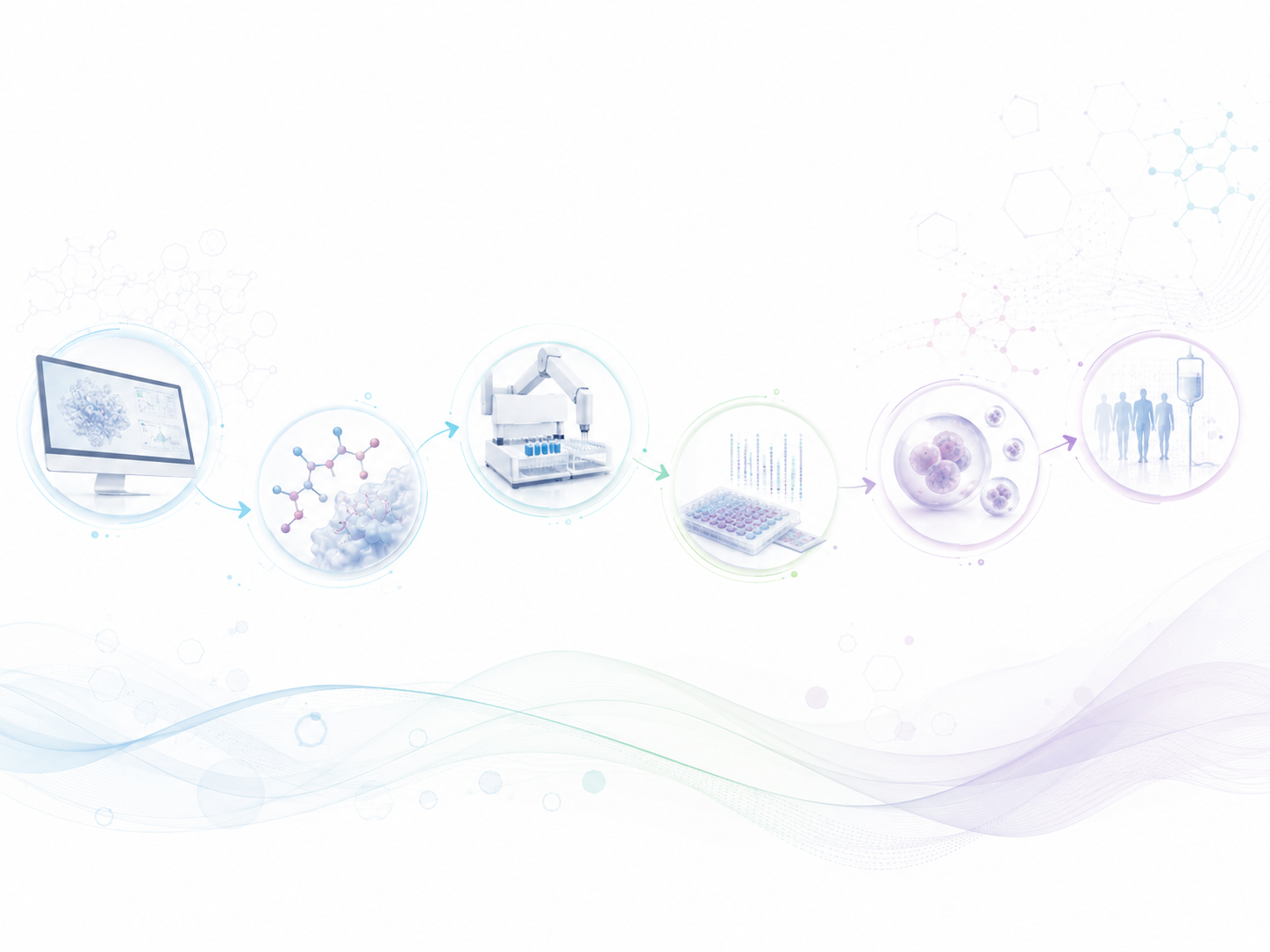
Our platform rapidly cycles between in silico prediction and experimental validation — linking virtual screening, automated synthesis, robotic assays, and organoid validation in a seamless pipeline. Work that once required teams of hundreds over many years can now be accomplished by a small group through deep integration of computation and automation.
Using molecular docking and high-throughput virtual screening, we evaluate hundreds of millions of compounds against target protein structures. Physics-based models combined with machine learning predict binding affinity, selectivity, and early ADMET properties before any synthesis — dramatically narrowing the candidate pool upfront.
Computationally selected chemical structures are fed directly into our automated synthesis platform. Our parallel synthesis robot enables a single researcher to produce up to 3,000 compounds per month, rapidly converting virtual candidates into physical samples ready for screening.
Synthesized compounds proceed straight into our robotic assay platform. Liquid handling robots operating with 96/384/1,536 well plate formats generate up to tens of thousands of reproducible data points per day, enabling rapid evaluation of large compound sets with high fidelity.
Drug candidates are validated in patient- and animal-derived organoid models — three-dimensional tissue constructs that faithfully recapitulate disease physiology. Efficacy and organ-specific safety are assessed in these physiologically relevant systems before advancing to in vivo studies.
Pipeline
Our current pipeline is focused on activating blastocyst adhesion capacity during embryo transfer, with multiple projects advancing in parallel.

Whether you are a researcher, investor, or potential partner — please reach out.